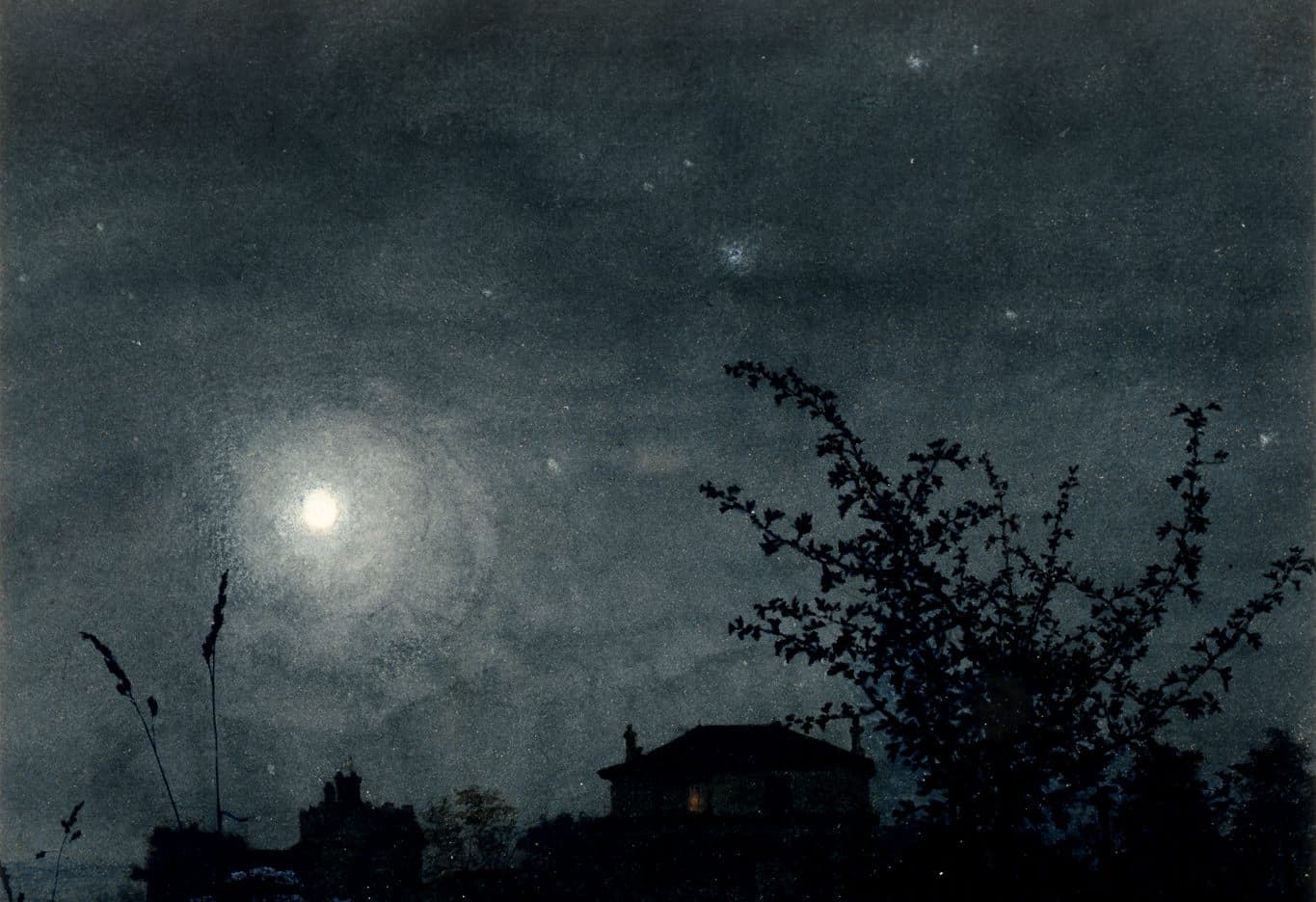
‘The most ethereal forms belong to Winter; hers is the beauty that the leaf has when substance and sap are gone and only the frail white outline remains. This is the best time to learn the proportions of things.’
—Mary Webb, The Spring of Joy: A Little Book of Healing, 1917
The Wheel of the Year is turning, and the next spoke we land on is Yule. It is a time to embrace the quiet of Winter, as the magic of nature’s cycles takes place mostly beneath the soil. Gather in the heart of these darker months and explore the ancient Yule traditions and practices this season has to offer.
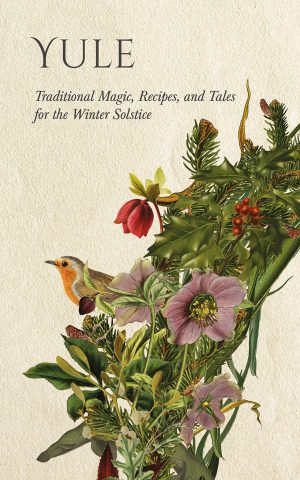
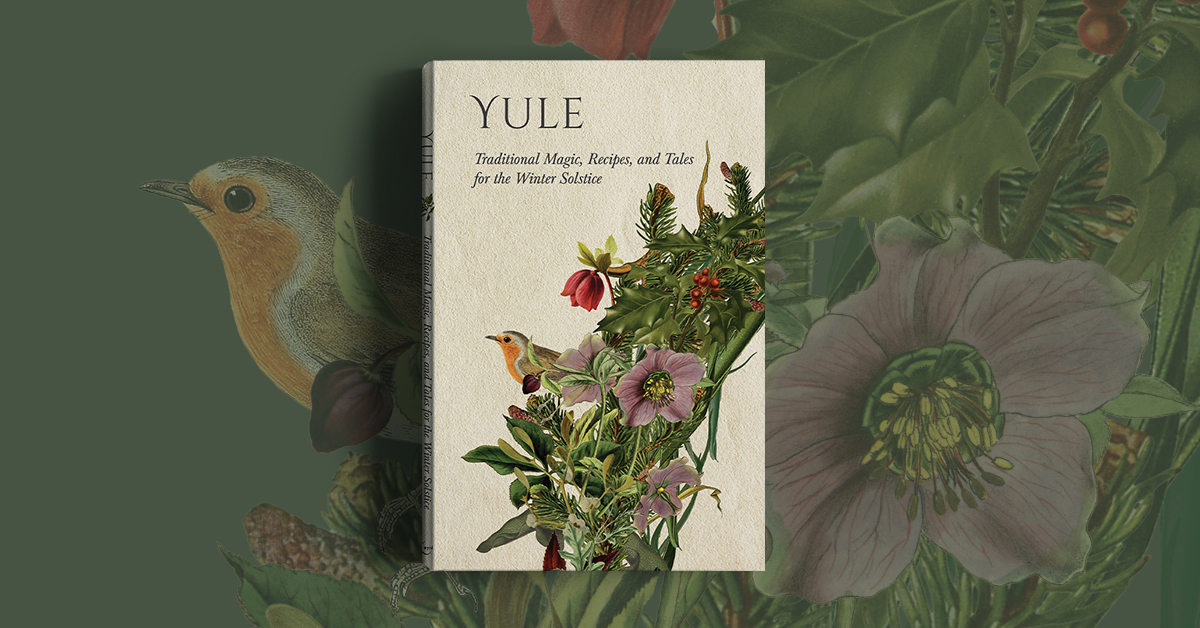
A magical guide to the most festive Sabbat celebration, Yule. Gather in the heart of Winter and explore the ancient traditions and practices Yuletide has to offer as we honour the rebirth of the Sun.
Folkloric History of Yule
Yule, also known as the Winter Solstice, is a time for rest and reflection as the lands lies barren and still. It marks the longest night of the year and is a sign of the returning light and warmth of the Sun as the days begin to lengthen once more.
Celebrated on the Winter Solstice, Yule marks the shortest day of the year. This Sabbat is a festival of rebirth, a promise of the Sun’s return, and bears many similarities to the Christian festival of Christmas. Marking the darkest moment in Winter, Yuletide, and our persevering Yule traditions are a reminder of the things that bring light and joy into our lives.
Yuletide in England
No country has entered more heartily into Yuletide observance than England. From the earliest known date her people have celebrated this festival with great ceremony. In the time of the Celts it was principally a religious observance, but this big, broad-shouldered race added mirth to it, too. They came to the festivities in robes made from the skins of brindled cows, and wearing their long hair flowing and entwined with holly.
The Druids in the temples kept the consecrated fires burning briskly. All household fires were extinguished, and anyone wishing to rekindle the flame at any time during the twelve days preceding Yuletide must buy the consecrated fire. The Druids also had a rather unique custom of sending their young men around with Yuletide greetings and branches of mistletoe (quiviscum). Each family receiving this gift was expected in return to contribute generously to the temples.
—Pringle and Urann, 1916
Yule's Evolution into Christmas
In Scandinavia, the great feast of Yule with all its various ceremonies, had celebrated the birth of the Winter Sun-god. In the Latin countries there had reigned Saturnalia, a cult of the god Saturn. The date December 25th, coincided also with the birth of Attis, a Phrygian cult of the Sun-god, introduced into Rome under the Empire. The popular feasts attached to the births of other Sun-gods such as Mithras, were also invariably celebrated at the same time of the Winter Solstice. In England the name Christmas superseded Yule, by which name the day and season are still known in Scandinavia.
—Urlin, 1915
Yule Spells and Charms
It’s no coincidence that many good-luck charms and spells designed to ward off evil originate from Yuletide. Winter heralds an innate fear and, for some, a deep-seated sadness that resides in the long-fingered shadows of the stretching nights and shortened days.
Learn how to harness the power of mistletoe berries for divination, keep unwanted influences at bay, and draw love and joy into your life during the darkest part of the year.
Yule Nut Love Divination Spell
The night before Christmas, you take two empty nutshells, with tiny wax tapers in them, to stand for you and your sweetheart, and set them afloat on a dishful of water. If they come together, your suit will prosper; if they go apart it will come to nought.
—Brand and Ellis, 1877
Yule Nut Love Divination Spell
The night before Christmas, you take two empty nutshells, with tiny wax tapers in them, to stand for you and your sweetheart, and set them afloat on a dishful of water. If they come together, your suit will prosper; if they go apart it will come to nought.
—Brand and Ellis, 1877
Yule Log Protection Spell
On Christmas Eve the Yule-log is laid on, and if possible kept burning two or three days. A piece of it is usually kept to light the next year’s log with, and to guard the household from harm. If it will not light, or does not burn out, it bodes mischief.
—Brand and Ellis, 1877
Lover’s Yule Ritual
Great bonfires were built, and the young men and maidens danced around them, wearing wreaths and garlands of vervain. Any young woman who gave to her lover a garland gathered and woven by her own hands insured his fidelity for at least all that year.
—Beals, 1917
Protective Virtues of the Yule Cheese
Cheese was an important part of the Yule refreshments. A slice, cut off at this feast, or a piece of the rind, if preserved and with a hole made through it, has strange virtues.
It was called laomachan, and a person losing his way during the ensuing year, in a mist or otherwise, has only to look through the hole and he will see his way clearly.
—Campbell, 1902
Yule Traditions and Rituals
Yule was more than just a promise of survival and the rebirth of the Sun, it was a time to celebrate, a day to honour the cycles of nature and the turning of the Wheel. Bonfires were lit, symbolising the return of light, and animals were often sacrificed to appease the gods and ensure a bountiful season ahead. The Yule traditions of the Yule log emerged from this practice, burning in the hope of a successful harvest in the future.
Yuletide Mistletoe Traditions
At Yule, the mistletoe gathered was divided among the people, who hung the sprays over their doorways as a protection from evil influences, and as a propitiation to the sylvan deities, and to form sheltering places for those fairy beings during the frosts.
—Napier, 1879
The Ritual of the Yule Candle
A tall mould candle, called a Yule candle, is lighted in the evening and set upon the table.
It would be unlucky to light the candle till the proper period; so also it is considered unlucky to move the candlestick during the supper, neither must the candle be snuffed, nor any one stir from the table till supper is ended. In these suppers it is considered unlucky to have an odd number at table, especially so if thirteen.
A piece of the candle should be kept to ensure good luck.
—Hardy, 1892
Yule Log Traditions to Honour the Dead
The Yule log was once a log burned on the hearth—the place of the family ghosts. On it libations were poured, which would then have been meant for the dead.
—MacCulloch, 1911
Mince Pies for Long Life
As many mince pies as you taste, so many happy months you will have.
—Hardy, 1892
These wondeful snippets of folklore are teeny sneak peeks into the wealth of ancient magic contained in our beautiful guide to the Sabbat, Yule: Traditional Magic, Recipes, and Tales for the Winter Solstice. Discover many more Yule traditions, spells, and charms in this volume, available now.
A magical guide to the most festive Sabbat celebration, Yule. Gather in the heart of Winter and explore the ancient traditions and practices Yuletide has to offer as we honour the rebirth of the Sun.
Further Reading and Resources
Beals, Katharine McMillan. Flower Lore and Legend. New York: Holt. 1917.
Brand, John and Henry Ellis. Observations on Popular Antiquities Chiefly Illustrating the Origin of our Vulgar Customs, Ceremonies and Superstitions. London: Chatto and Windus. 1877.
Hardy, James. The Denham Tracts. London: D. Nutt. 1892.
MacCulloch, J. A. The Religion of the Ancient Celts. Edinburgh: T. & T. Clark. 1911.
Napier, James. Folklore: or, Superstitious Beliefs in the West of Scotland Within this Century. Paisley: Alexander Gardner. 1879.
Pringle, Mary P. and Clara A. Urann. Yule-Tide in Many Lands. Boston: Lothrop. Lee & Shephard Co. 1916.
Urlin, Ethel Lucy Hargreaves. Festivals, Gold Days and Saints’ Days. London: Simpkin, Marshall, Hamilton, Kent & Co., Ltd. 1915.
Webb, Mary. Poems and the Spring of Joy. London: Jonathan Cape. 1946.